ScaleGrove · Product case study
An AI marketing team for small ecommerce brands.
ScaleGrove is the marketing software I'm building for founders and small teams running an online store. It is designed to use their store and campaign data to recommend what to work on, turn that direction into a marketing plan, and prepare campaign content for their review.
The aim is to give a small brand access to the research and working methods of an agency, with the owner involved in the decisions.
See how a brand would use it ↓For the founder who is also the marketing department
A small store can have sales in Shopify, campaigns in Klaviyo and ads running on Meta, while the owner still has to decide what deserves attention next. Commissioning the work adds another job: translating those numbers into a brief and keeping track of revisions.
I designed ScaleGrove around that workload. The proposed workflow keeps the evidence beside the recommendation, then carries the approved direction into the content the brand needs. The owner can spend their review time on the offer and message, with the supporting information in view.
From store results to campaign work
These 8 screenshots show the product interface using sample data. The walkthrough explains the intended workflow; the figures are illustrative, and the screens do not establish that every integration or deployment capability is live.
Understand the numbers before choosing the work.
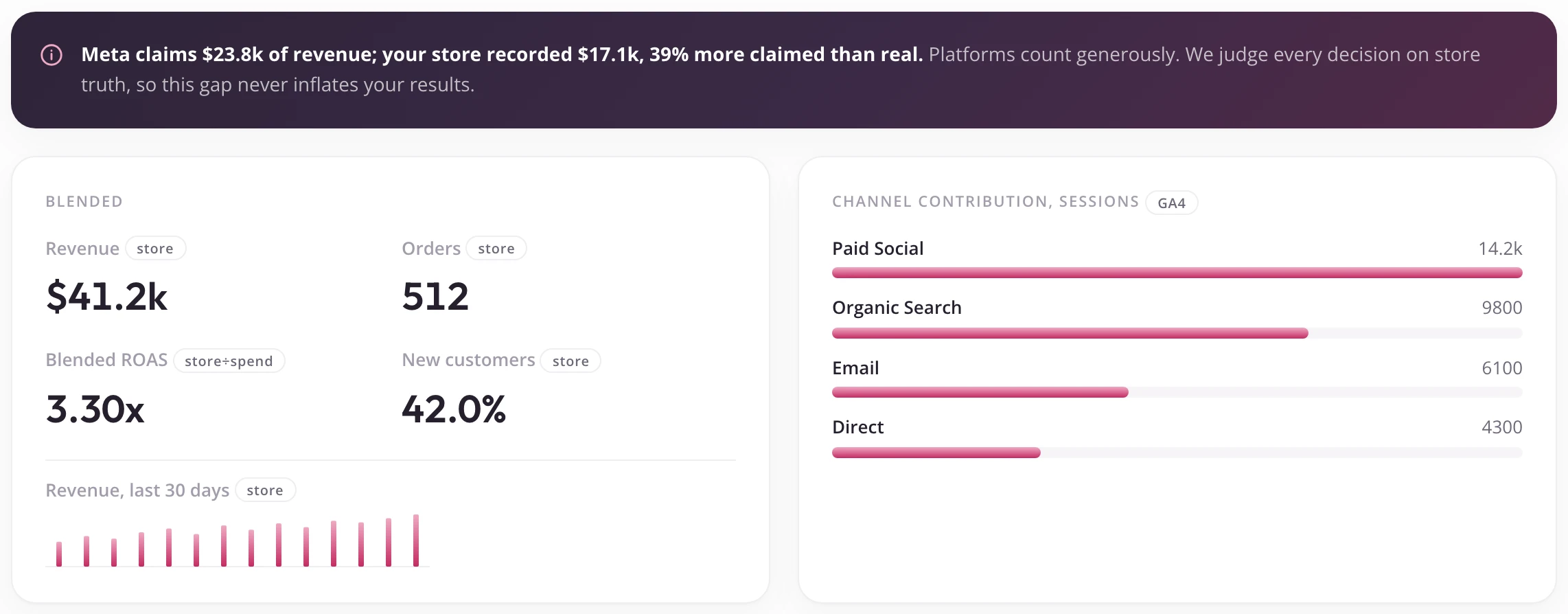
The performance view puts store revenue and orders beside channel results. In this example, it also flags a gap between the revenue claimed by Meta and the revenue recorded by the store.
A founder deciding where to spend next needs that distinction. The design makes conflicting measurements visible before they become a budget decision.
 Open full-size preview ↗
Bring the existing tools into the workflow.
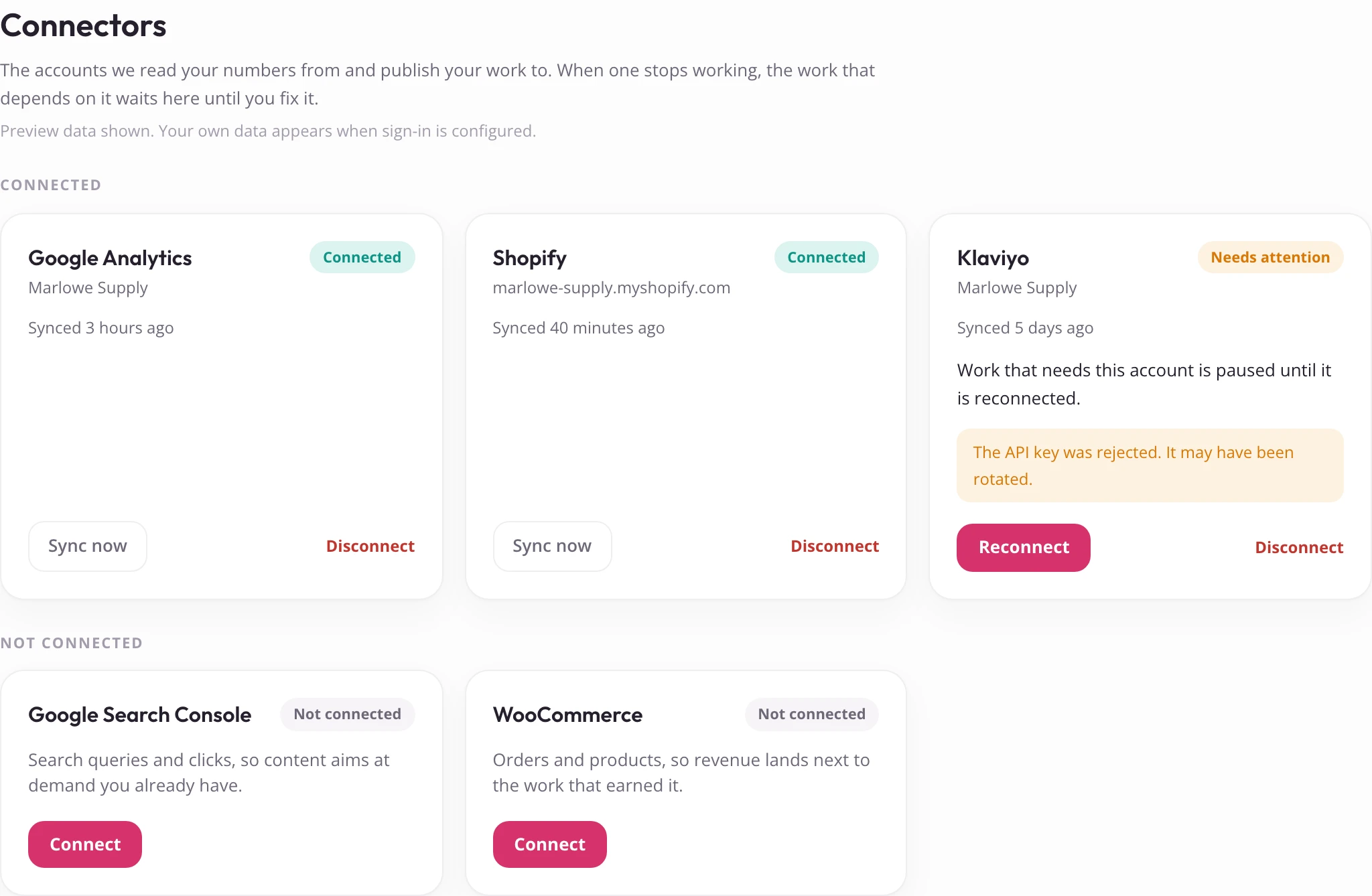
The connection screen shows which accounts supply the data and whether they need attention. The sample includes Shopify and Google Analytics, with Klaviyo waiting to be reconnected.
This is designed around tools a brand already uses. Showing connection problems gives the owner a way to see why work has stopped or why the data may be incomplete.
 Open full-size preview ↗
Turn a finding into a specific next action.
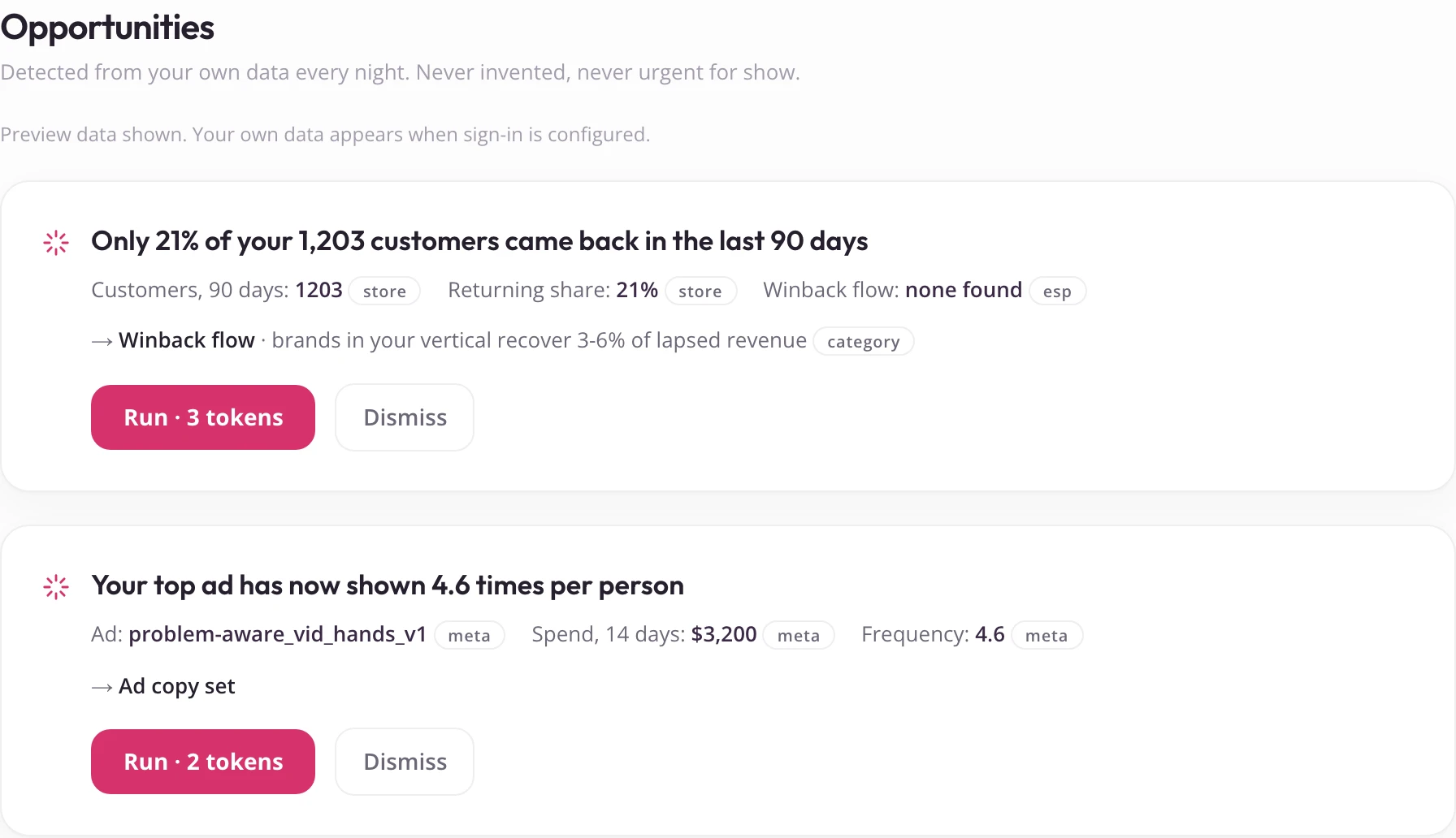
The opportunity view pairs a low returning-customer rate with a missing winback flow. A separate finding identifies repeated ad exposure. Each recommendation sits beside the evidence behind it.
For a small team choosing between another acquisition campaign and bringing past customers back, this is a useful starting point for deciding what to brief.
 Open full-size preview ↗
Agree on a plan with defined deliverables.
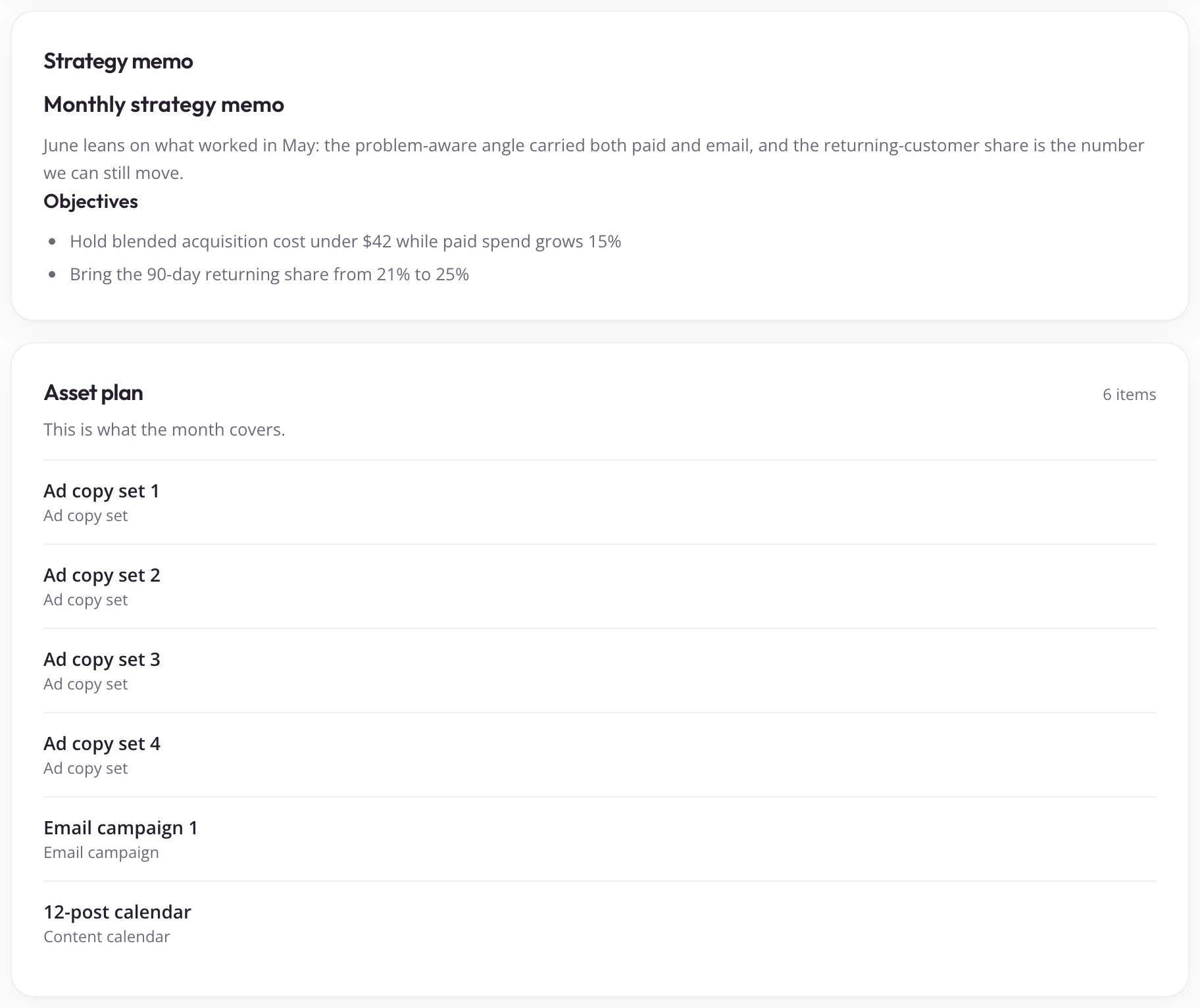
The monthly plan includes a strategy memo and a list of assets to produce. The owner can review the reasoning and proposed scope together before work begins.
That makes the plan usable as a brief. A small team can see what it is asking for and judge whether the proposed work fits the business.
 Open full-size preview ↗
Review the actual campaign content.
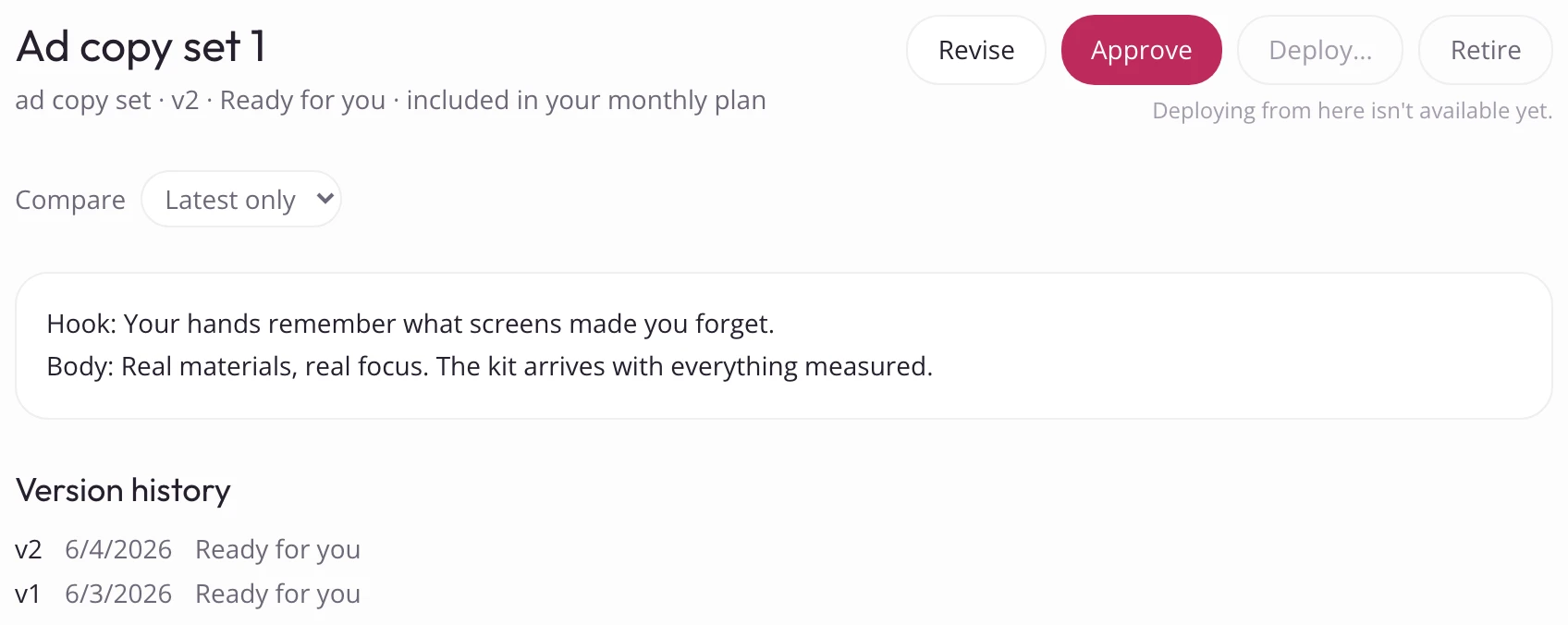
The asset library shows an ad copy set, an email campaign and a content calendar, with their review states. Opening the ad reveals its text and version history.
The goal is to carry strategy through to draft content. Keeping the drafts and revisions together gives a founder a place to review the message and ask for changes.
 Open full-size preview ↗
 Open full-size preview ↗
See the proposed action before approving it.
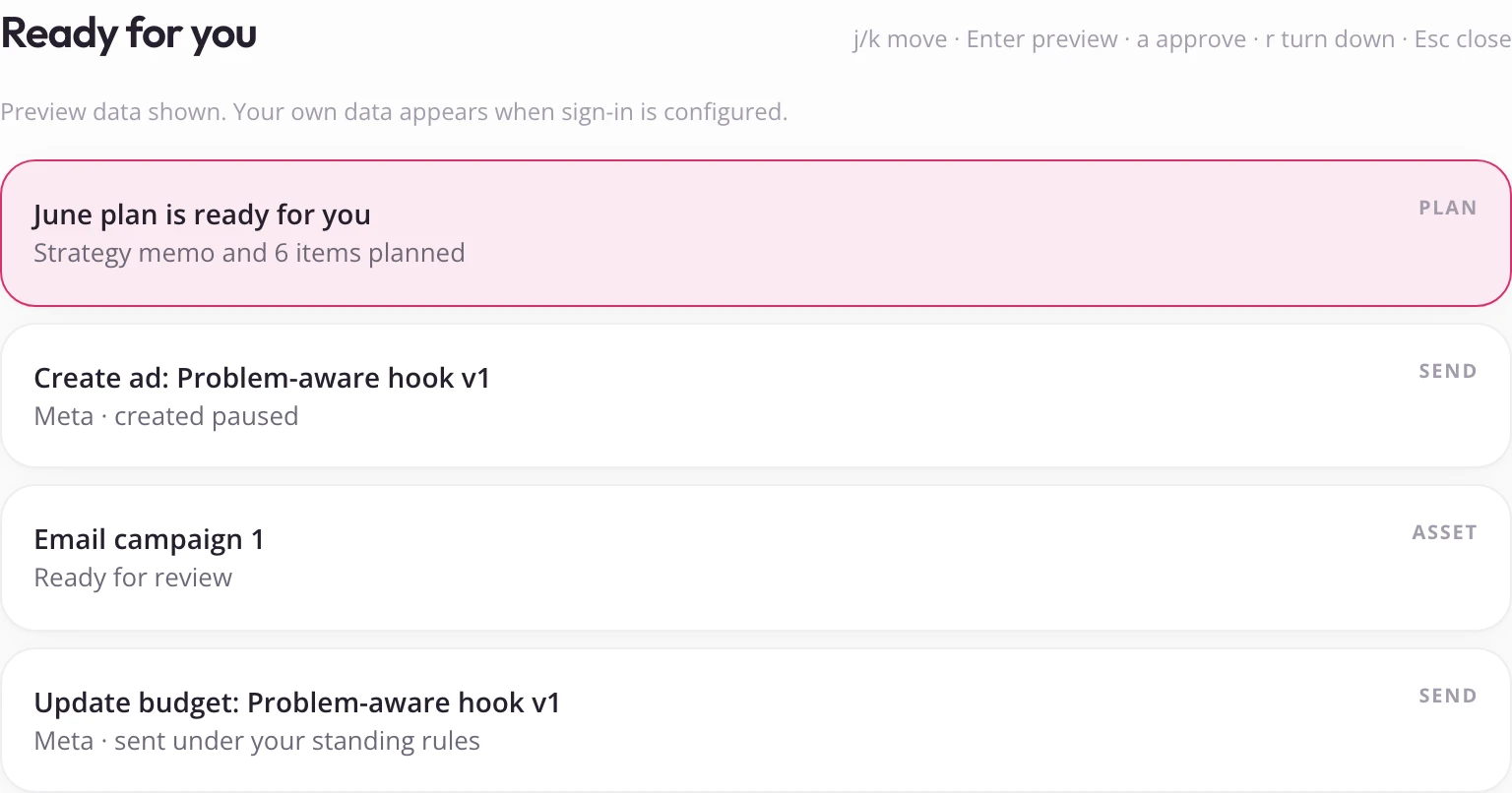
The approval queue brings a monthly plan and proposed campaign actions into one review list. It separates the content decision from the action that would affect a connected account.
A founder can inspect what is being requested before agreeing to it. That approval step is part of the product design, including for work prepared by AI.
Define the limits the brand needs.
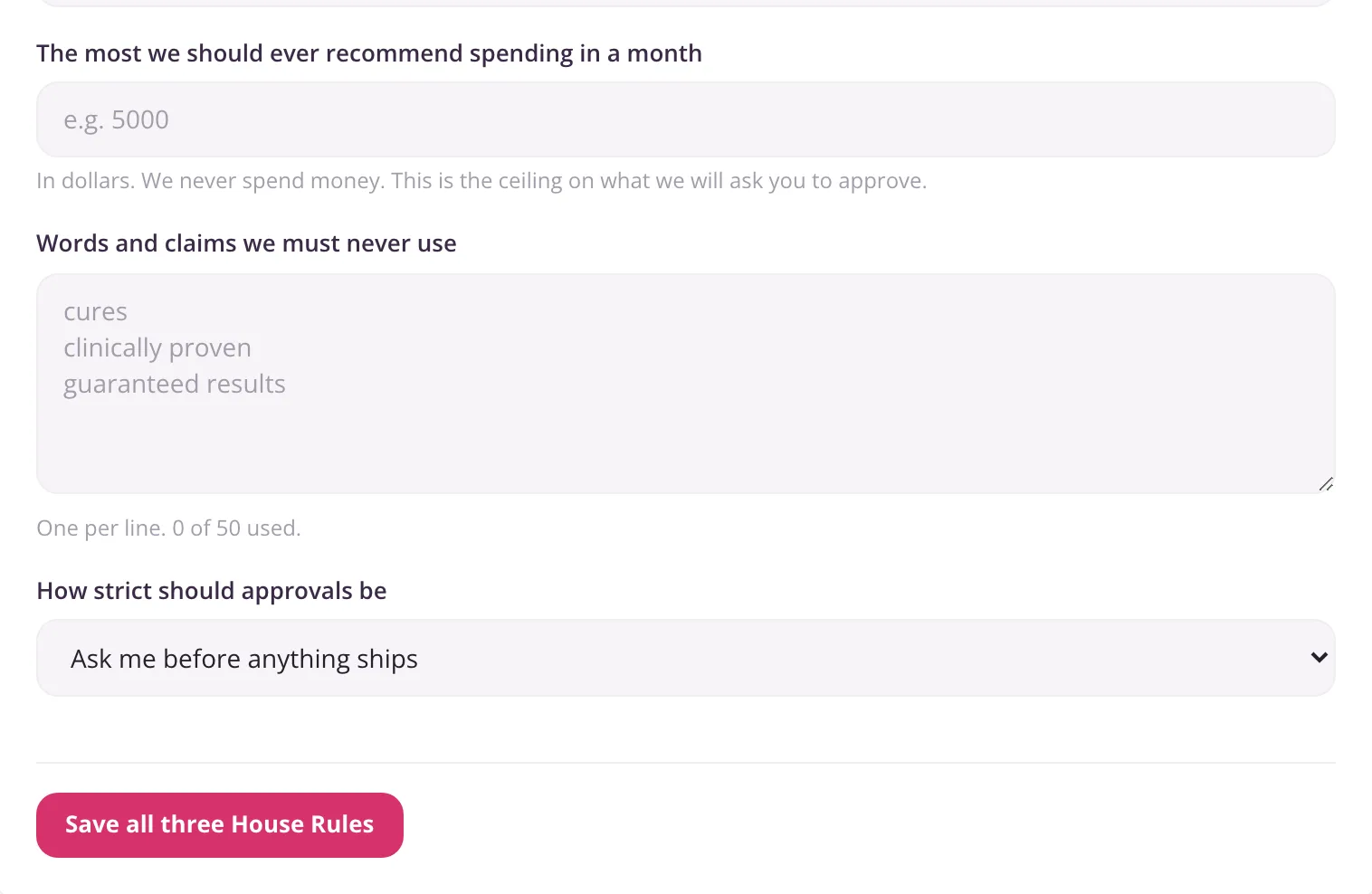
The House Rules form asks for a monthly spending ceiling, words or claims to exclude, and an approval preference. These settings express the boundaries the owner wants the system to follow.
The intended benefit is consistency across recurring work. A brand should be able to state its limits once and use them to assess each new recommendation.
The agency experience behind the product
I built the marketing logic from my own frameworks and SOPs, then used AI-assisted coding to develop the SaaS. My work connects the customer problem to the product requirements, including the evidence a recommendation needs and the point at which the owner reviews it.
The earlier Hermes marketing agent team was where I put those research methods into practice. In my use, it can complete a week's marketing research and analysis in under 4 hours. That observation applies to the Hermes workflow, separately from the SaaS previews above.
ScaleGrove is my attempt to make those working methods useful to a small brand through software: a place to understand what needs attention and review the work that follows.